Daily structure & schedule
Movement works best when it has a clear place in the day
Aktivitetskonceptet is built to fit into the existing preschool day — with clear time blocks, calm transitions and flexible activity spaces. The structure is there to create reassurance and feasibility, not control.
Why structure matters
Meals, rest and circle time have a clear place. So should movement.
Many preschools want to do more with movement. But in practice, movement often ends up depending on spare time, the weather, how the group is doing, last-minute planning and individual educators. Meals are scheduled. Rest is scheduled. Circle time happens at set times. Aktivitetskonceptet's view is simple: motor skills and movement also need a clear place in the day to be deliverable and equitable over time.
Making sure daily motor skills and movement actually happen — in a way that's reassuring, structured and feasible.
Not about filling the whole day with activities. Not about steering the preschool's pedagogy. Not about creating more stress. It shouldn't feel like control — it should feel like reassurance, rhythm, clarity and feasibility.
Without a clear place, movement depends on
- Time that happens to be left over
- The weather that day
- How the group is doing
- Last-minute planning
- Individual educators' initiative
With a clear place in the day, movement gets
- Reassurance
- Rhythm
- Clarity
- Feasibility
The day's structure
A clear day — without the whole day being steered
Aktivitetskonceptet gives movement a place in the day. The rest of the day stays the preschool's — free play, meals, rest and ordinary pedagogical work, following the setting's own rhythm.
Drop-off and free play
A calm start to the day. Free play, time outdoors and ordinary activities. Aktivitetskonceptet doesn't steer this part of the day.
Morning – motor skills and movement
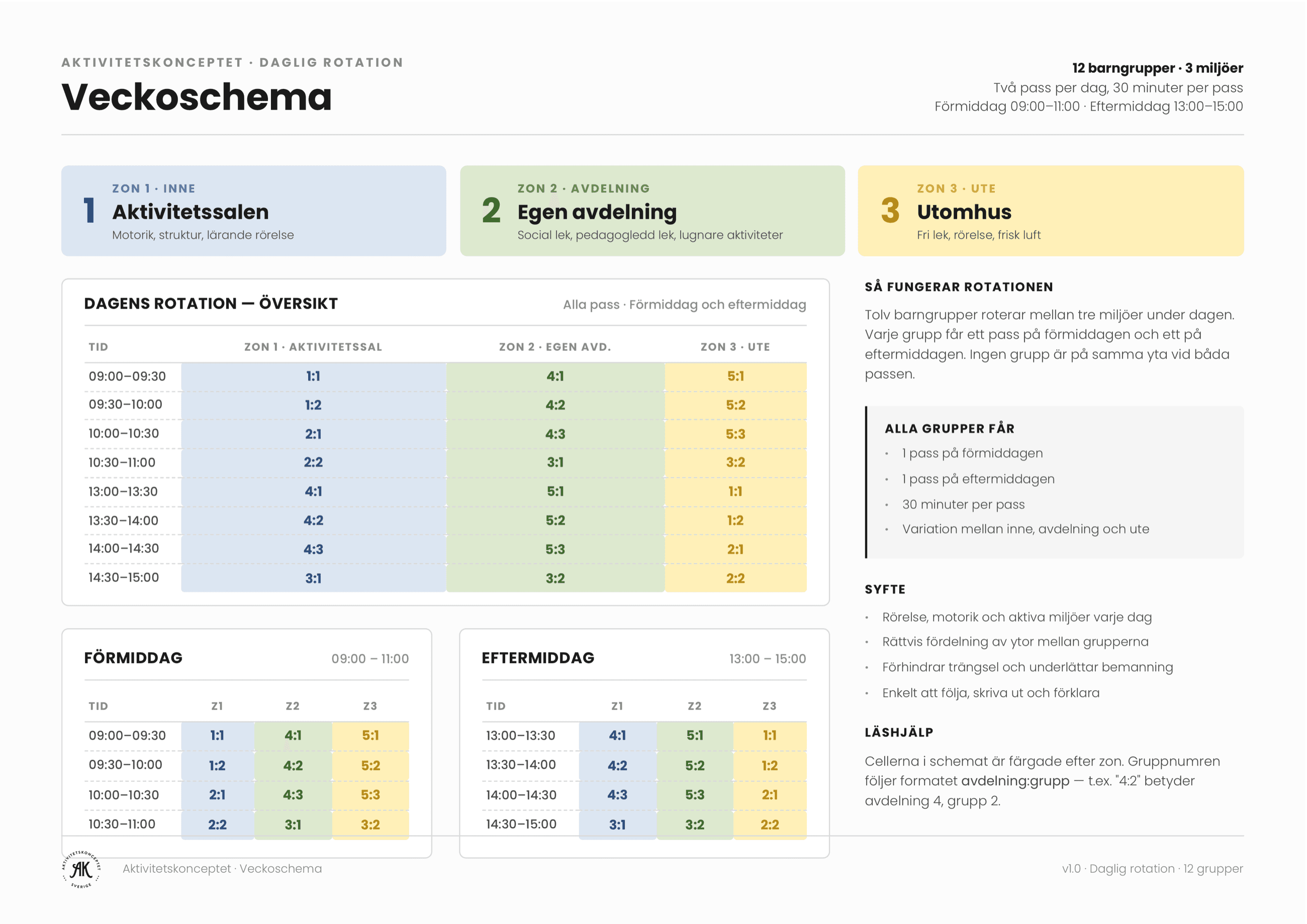
The morning is split into 30-minute blocks. Each block holds around 21 minutes of active movement — plus time for setup, moving between spaces, wrap-up and switching groups.
Lunch, rest and ordinary activities
Meals, rest and pedagogical work, following the preschool's own rhythm. Aktivitetskonceptet doesn't steer this part — it stays the preschool's professional responsibility.
Afternoon – room for more movement
The same opportunity for movement returns. The preschool sets the level of ambition — the system is built on at least one session a day, with two as an option.
Pick-up and free play
A calm close to the day with free play, time outdoors and pick-up. Aktivitetskonceptet doesn't steer this part of the day — movement is simply allowed to live on naturally through play, energy and activity at the children's own pace.
Respect for the setting
The structure gives movement a place — it doesn't interfere with meals, rest or ordinary pedagogical work. That is, and remains, the preschool's professional responsibility.
Capacity & rotation
How much movement an activity space holds
The morning (09:00–11:00) gives four 30-minute blocks. The afternoon (13:00–15:00) gives four more. That's up to eight possible movement sessions per activity space, per day. This is about how many groups can use the system — not about children training all day.
The 30-minute block
Each block is 30 minutes: around 21 minutes of active movement, plus time for setup, moving between spaces, wrap-up and switching groups. The margin is there so transitions stay calm.
This shows capacity — not pace
The numbers describe how many groups can rotate through the system in a day. No child trains all day — the system is built on at least one session; the rest is opportunity.
1 activity space
Up to 8 movement sessions a day — four in the morning, four in the afternoon.
2 activity spaces
Up to 16 movement sessions a day, spread across two spaces.
3 activity spaces
Up to 24 movement sessions a day, spread across three spaces.
Flexibility
Built for real life — not for the binder
Aktivitetskonceptet isn't rigid, locked or inflexible. Educators can always adapt delivery to what the day needs — and movement still gets its place.
When the weather won't cooperate
Rain, cold or wind should never decide whether the day's movement happens. The session moves indoors — to the unit or a movement room.
When the group needs calm
If the day needs softer transitions, the session runs where the children already feel safe, in a quieter format.
When getting dressed takes over
Is putting on and taking off outdoor clothes eating too much time and energy? Then the session stays indoors instead of heading out.
When the setting needs room to move
An outing, fewer educators, something unexpected — delivery adapts, and movement still gets its place.
The most important thing
Aktivitetskonceptet isn't about forcing children between environments. It's about making sure movement actually happens — in a way that's reassuring and feasible.
Designated movement environments
At the same time: a clear, designated space makes a difference
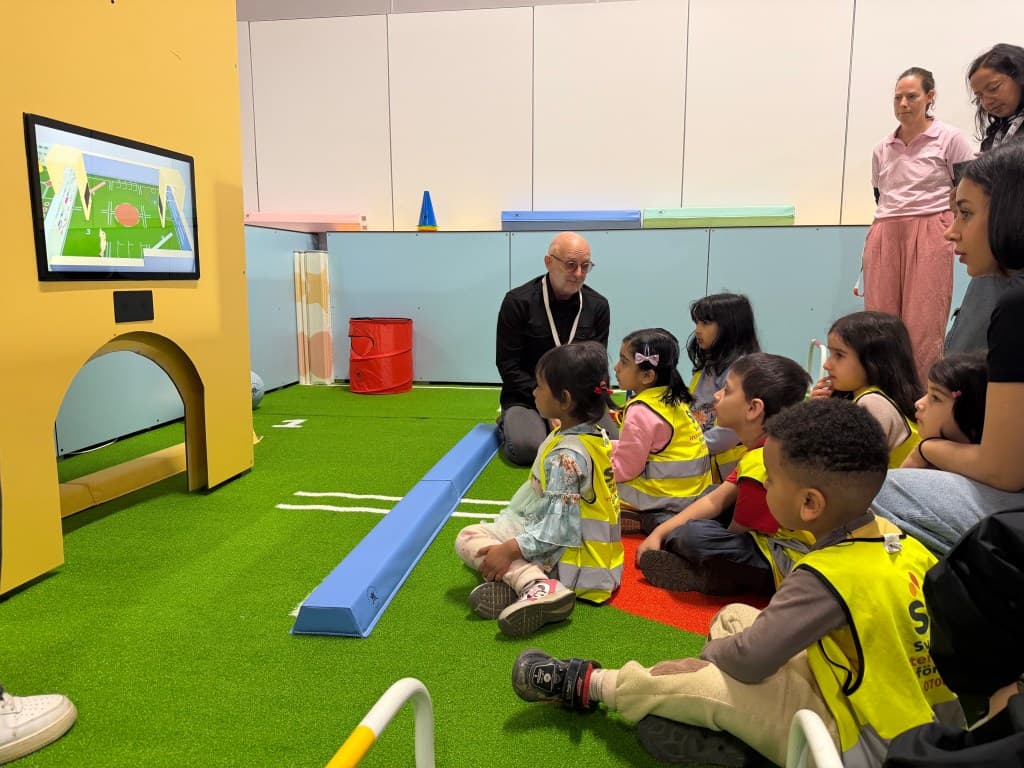
Aktivitetskonceptet also strongly believes in the value of clear, designated movement environments. When children come to a space they recognise, with more room and the right conditions, something often happens.
We believe motor skills and movement work best when children have access to clear, reassuring movement environments.
Better focus
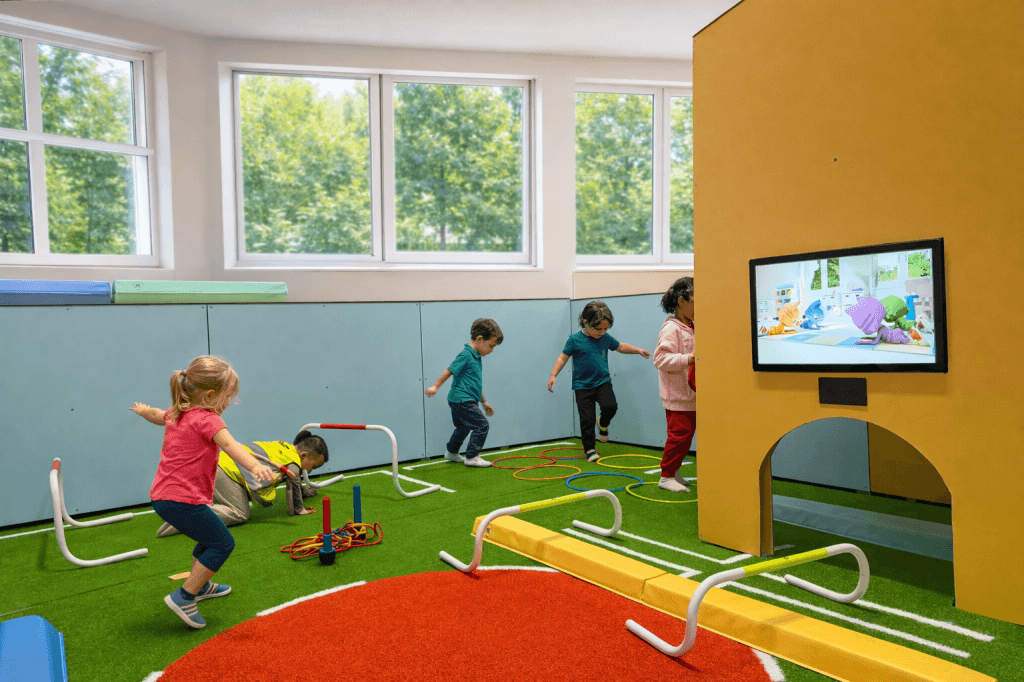
A clear environment makes it easier for children to put their attention on the movement.
More joy in movement
More room and a familiar setting mean more children dare to try and want to take part.
Calmer delivery
When the environment is prepared, the session is calmer to lead — for educator and children alike.
A better motor environment
The right conditions in place give children more out of every session.
Afternoon
13:00–15:00 — an option, not a requirement
The same opportunity for movement returns in the afternoon. The preschool sets the level of ambition: the system is built on at least one session a day, but two is entirely possible if the setting wants it.
The preschool decides the level of ambition. A clear floor — at least one session — and a ceiling that leaves room to want more.
Repetition is welcome
Children often like meeting something again. What was new in the morning becomes familiar in the afternoon.
Joy in movement grows over time
The joy in moving isn't built in a day — it grows when it gets to come back.
It carries into play
The activities often live on in free play afterwards — without anyone needing to steer it.
Through life
The most important bank account a child will ever carry is their own body.
We spend a lot of time on the things around us — but the foundation for everything else is that children feel safe, find joy in movement and trust their own body.
Aktivitetskonceptet isn't about performance. It's about giving children better conditions to carry movement, body control and confidence with them through life.
Next step
Want to see what it would look like at your site?
We go through your everyday routine, your spaces and your schedule together — and show how daily movement can become deliverable without adding to educators' workload.